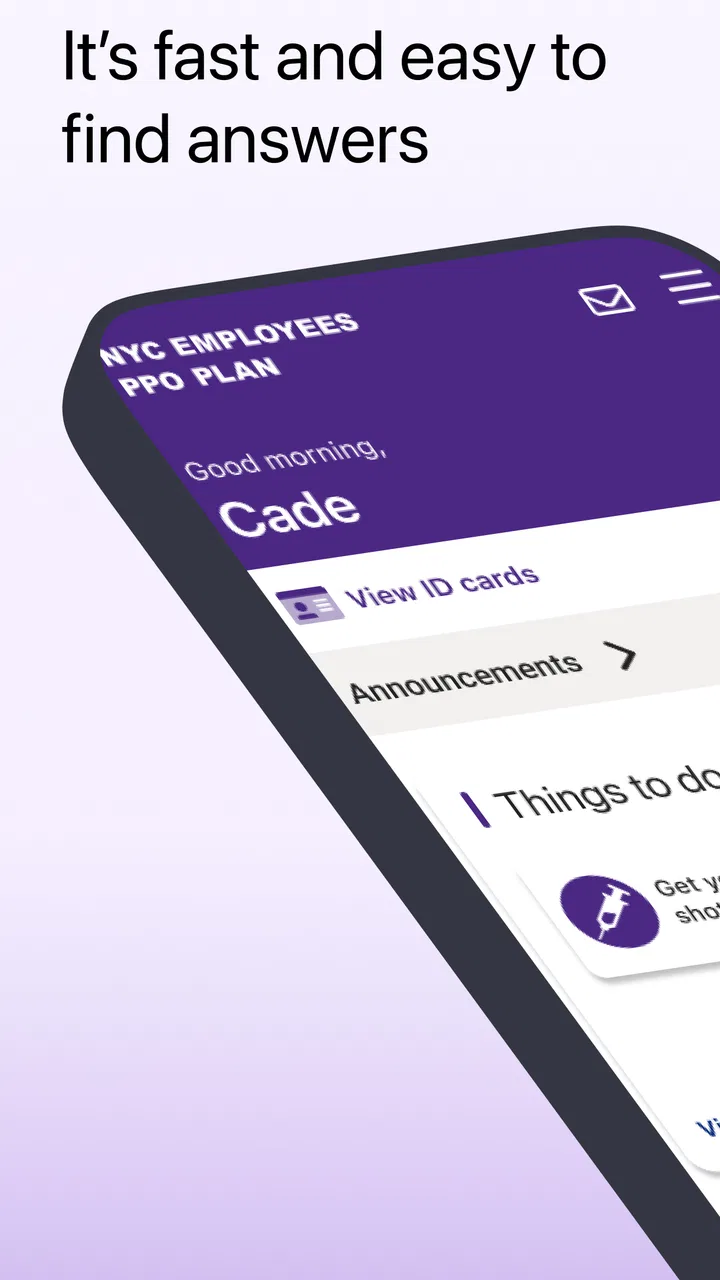
NYC Employees PPO Plan
- 4.7
- Rating
- 10.00K
- Installs
- Free
- Price

 Analysis by App-foxy
When I look at a medical app, I do not judge it like a fitness tracker or a general health encyclopedia. I want to know whether it helps me handle a real administrative moment without making that moment more confusing. The NYC Employees PPO Plan app is aimed at members of the NYC Employees PPO Plan, and its starting point is very specific: access begins after you receive your member ID card. That makes it less of an open-ended health tool and more of a private doorway into plan-related information.
I found that focus useful. Instead of trying to serve everyone, the app is built around a particular group and a particular access condition. It is a free medical app from UNITED HEALTHCARE SERVICES, INC., available for Everyone, with a 4.7 average from around 170 ratings and more than 10 thousand installs. Those figures suggest that members who find it useful are responding well to it, although the relatively focused audience means it is not the sort of app I would recommend casually to someone who is not connected to this plan.
How it fits into a shared household
The most realistic way I would use this app is during a small household handoff. Imagine a family member receives the PPO member ID card, installs the app on a personal phone, and later needs to check plan information while arranging care or sorting out paperwork. Another person in the household may help with setup, especially if the card or account details are being organized, but the app should still be treated as belonging to the member whose coverage it represents.
You May Also Like

 Blood Strike: 2.5 Anniversary
Blood Strike’s Loadouts Turn Every Drop Into a Tactical Gamble
A close look at Blood Strike’s custom loadouts: how fast access to signature weapons reshapes its battle royale rhythm, rewards preparation, and narrows the gap between fights.

 Pandora - Music & Podcasts
Pandora’s Music Is Easy to Start, but Harder to Recover
Pandora’s strength is its low-effort path from a seed to a station. Its weak spot is how much confidence it asks you to place in connection, setup, and quiet recovery.

 8 Ball Pool
 Is Built on Rivalries, Rematches, and Routine
A close look at the rivalries, rematches, shared routines, and unanswered safety questions that turn a quick pool match into a persistent mobile community.

 Samsung Music
’s Quiet Strength Is Playing What You Already Own
Its reach comes less from spectacle than from dependable access to a personal library. That simplicity is both the app’s strongest retention engine and its ceiling.

 AccuWeather: Weather Radar
AccuWeather Review: A Quick, Clear Forecast for Everyday Decisions
For everyday plans, the best forecast is the one you can understand quickly. AccuWeather makes rain timing, radar, and local conditions easy to act on, with a few trade-offs.

 Hill Climb Racing
Why Hill Climb Racing Still Turns Crashes Into One More Run
A tiny car, a bumpy hill and one more upgrade: Hill Climb Racing keeps resurfacing because its simple chaos makes every near-miss feel personal.
More From Our News Desk
View All News


That distinction matters on shared devices. A phone used by several people can be convenient, but medical information is not the same as a shared shopping list. I would avoid leaving the app open for another household member to browse, and I would not treat the installation itself as permission for a spouse, adult child, caregiver, or roommate to manage the member’s information. The practical rule is simple: use shared-device help for installation and navigation, while keeping the member’s access and personal details under that member’s control.
The app’s narrow purpose can actually make this arrangement easier. A helper does not need to search through a broad health platform to find the relevant plan area. The member can identify the app associated with the NYC Employees PPO Plan, complete the access process after receiving the ID card, and then keep the app available for later moments. I would still make sure the member knows which account or access details were used, rather than allowing a helper to become the only person who understands how to get back in.
The best shared-use habit is to separate assistance from ownership. A family member can help read instructions or hold the phone during setup, but the covered person should remain the person who decides when the app is opened and who can see what is on screen. That is especially important when a device is passed around at home or used by children for unrelated tasks.
Starting with the member ID card
The member ID card is not a minor detail here; it is the practical starting line. I would have it nearby before installing the app, rather than downloading first and assuming the rest will be obvious. This avoids a common household problem: someone installs an app for a relative, then has to stop halfway because the person whose plan it is does not have the card available.
I also recommend checking the plan identity carefully before entering anything. The name NYC Employees PPO Plan is specific, and choosing a similarly named health app by mistake could create unnecessary confusion. On a shared phone, I would also confirm that the app is being installed for the correct member and not simply for the person who happens to own the device.
Because the app is designed for members rather than general browsing, I would not expect it to be useful before the card is in hand. That is not a criticism of the design; it is a boundary that keeps access tied to the plan. If you are helping someone who has not received the card yet, the more sensible step is to wait for the card or use the appropriate plan contact route instead of trying to make the app serve as a substitute for enrollment or eligibility confirmation.
Once access is established, I would take a few minutes to understand what the app presents before relying on it during a stressful appointment-related task. A calm first visit is the right time to notice how the member area is organized, where plan information appears, and what the app expects from you. That small investment can prevent hurried tapping when you are standing at a reception desk or trying to answer a family member’s question.
Boundaries that matter on a phone used by more than one person
I would be careful about notifications, saved sign-in details, and the phone’s own lock settings. The app’s store summary tells me that access is member-based, but it does not turn a shared handset into a private device. If several people use the phone, the member should review what can appear on the lock screen and avoid handing the unlocked device to others while the app is open.
This is also why I would not install the app on a child’s device simply because the child is part of the household. The age label is Everyone, which describes the app’s store suitability, not automatic permission for every family member to view or manage an adult’s medical information. A young person may help carry the phone or locate the icon, but that is different from giving them unsupervised access to the member area.
For an older adult, the situation can be reversed. A trusted relative may need to help with the initial setup or explain what is on screen. I would keep that help transparent: let the member see the card, know the sign-in details, and decide whether the helper should remain involved. If the phone belongs to the helper, I would be even more cautious about lock-screen exposure and accidental access by other people in that home.
One useful workflow is to designate a quiet setup moment rather than doing everything in a crowded room. Have the member ID card ready, use the member’s own email or contact details where the process asks for them, and let the member make the final decisions. This is not about making the app seem difficult. It is about preventing a simple convenience arrangement from becoming an unclear account boundary later.
Using the app to coordinate care without losing track of responsibility
The app is most valuable when it reduces the friction around plan-related tasks. In my experience, coordination often fails not because a person lacks information, but because that information is scattered between a card, a phone conversation, a family group chat, and memory. Keeping the plan app on the member’s phone gives the household a more consistent place to begin when a question comes up.
For example, suppose one partner is arranging an appointment and the other partner is the covered employee. I would not assume the arranging partner should simply take over the account. Instead, I would keep the member present for the access step and then use the app together when checking the information needed for the next call or visit. The member can read the relevant details aloud, write down what is needed, or hand over the phone briefly while staying involved.
That approach has a second advantage: it reduces the risk of outdated screenshots. Medical and plan information can be easy to misread when copied into a message, and a screenshot may remain in a chat long after the original reason for sharing it has passed. When possible, I would open the app again at the time of the task instead of relying on an old image saved in the household’s messages.
I would also avoid treating the app as a replacement for every conversation with a provider or plan representative. An app can help you find or review member-facing information, but an appointment office may still ask for the physical or digital ID card, and a complicated coverage question may require direct clarification. The sensible workflow is to use the app as the first organized reference, then confirm anything that depends on the details of a particular service, provider, or claim.
Another practical tip is to decide in advance who will carry the next step. If one person opens the app, another calls the office, and a third keeps the paperwork, write down who is responsible for the follow-up. The app can support coordination, but it cannot solve household confusion caused by three people assuming someone else completed the task. I like it best as a shared reference used by the member, not as an invisible administrative system managed by whoever is most comfortable with phones.
Age, trust, and the difference between help and access
The Everyone content rating makes the app approachable from an age-classification perspective, but I would not read that as a recommendation for unsupervised household sharing. Medical access has a trust dimension that is separate from whether an app contains material suitable for all ages. A teenager may be perfectly capable of opening an app, while still not being the right person to manage a parent’s member access.
For children in the household, my approach would be straightforward: keep the app on the member’s protected device or profile and let children use the phone for other purposes without opening it. For teenagers helping a parent, I would explain what they are doing and keep the parent involved. For adult caregivers, I would agree on a clear routine, such as opening the app together when information is needed rather than leaving the account permanently available on the caregiver’s phone.
Trust also matters between adults. A partner may share many household responsibilities without automatically being the plan member. If the app is installed on a shared tablet or family phone, I would be especially deliberate about who can unlock the device and whether the member is comfortable with that arrangement. The safest setup is usually the least complicated one: the member’s own device, the member’s own access, and help provided when requested.
When someone has difficulty reading small text, remembering steps, or navigating a new app, a helper can make the experience much less frustrating. I would use accessibility settings already available on the phone, take notes in plain language, and avoid creating a private system that only the helper understands. The member should be able to recognize the app, know why it is installed, and understand who may assist with it.
What I like about the focused design
The strongest quality is its specificity. This is not a generic medical app asking me to explore a large collection of unrelated health tools. It is connected to the NYC Employees PPO Plan, so the intended audience and the reason for installing it are clear. For a member who has the ID card and wants a plan-centered mobile access point, that focus is more useful than a broad wellness application filled with features that have nothing to do with current coverage.
The free price also removes an obvious barrier. I can recommend trying it without asking whether a household should add another subscription to its monthly budget. Its Everyone rating makes it easy to identify in an app marketplace, while the current version, 1.8.0, indicates that the app has a defined release line rather than being presented as an abandoned one-off download.
The developer, UNITED HEALTHCARE SERVICES, INC., is clearly associated with the app, which is helpful when checking that you have selected the intended product. That is a small but important safety habit in the medical category, where similarly worded names can make it easy to install the wrong application.
The 4.7 average is encouraging, and the app has gathered around 170 ratings along with 11 written reviews. I would treat that reception as a positive signal, not as proof that every member will have the same experience. A focused plan app can be excellent for the people it serves and still feel irrelevant to someone outside that plan or to someone looking for medical advice, symptom checking, or a general health record.
Where a usual alternative may be better
If I wanted general health education, medication reminders, exercise tracking, or a broad personal health record, I would choose a different type of app. The NYC Employees PPO Plan app is not the first tool I would reach for when I want to log blood pressure, count steps, research symptoms, or organize records from several unrelated providers. Its value comes from its connection to the plan, not from being an all-purpose health companion.
A provider’s own patient portal may also be better for clinical tasks tied to a specific doctor or hospital. If my main need were test results, appointment messaging, or a treatment history, I would look to that provider’s system first. The PPO app makes more sense for the insurance side of the journey, especially when the question is connected to membership or plan information rather than the clinician’s medical record.
For a household that already uses a desktop browser for one person’s benefits and does not want another mobile login, the app may not change much. The phone format is most helpful when the member wants plan access while away from a computer or when a family member needs to coordinate a task in the moment. If the member rarely uses mobile apps, the setup effort may feel greater than the convenience gained.
I would also skip it if I did not have a member ID card for the NYC Employees PPO Plan. Installing a plan-specific app without the matching membership is unlikely to solve a general insurance question. In that situation, a general insurer contact route or the correct plan resource would be a better starting point.
A realistic household routine
Here is how I would use it in practice. The member receives the ID card and installs the app on the phone they use every day. A partner sits nearby during setup but does not take ownership of the account. After access is ready, they review the member area together and note where the information needed for future calls can be found.
A few weeks later, the partner needs to help arrange care during a busy workday. Rather than searching through old messages, they ask the member to open the app. The member remains present, the partner writes down the relevant details, and the two of them contact the appropriate office if the question requires confirmation. Afterward, the member closes the app and keeps the phone. That routine gives the household cooperation without turning medical access into an uncontrolled shared login.
If the member travels, I would make sure the app is already installed and the access process is understood before leaving. If an older relative is the member, I would practice the steps once while they are relaxed rather than waiting until an appointment is imminent. If a child borrows the phone, I would rely on the device lock and keep the app closed. These small choices are more important than trying to make every household member a regular user.
My household verdict
I see NYC Employees PPO Plan as a practical, narrowly targeted medical app for the person whose member ID card connects them to the NYC Employees PPO Plan. I like that its purpose is clear, its price is free, and its focused design can make plan-related coordination less scattered. The strong average rating and growing install base are reassuring, while the current 1.8.0 release gives members a clear version to look for on a compatible device running OS 9 or later.
My recommendation comes with a boundary: install it for the covered member, not as a casual family utility. A partner, caregiver, or older child can help, but the member should understand the access and remain in control of who sees the screen. On a shared device, careful locking, thoughtful notification settings, and a simple agreement about responsibility matter as much as the app itself.
If you are a NYC Employees PPO Plan member with your ID card in hand, I would try it before defaulting to paper notes or a crowded collection of saved screenshots. If you need broad health tracking, clinical records, or medical advice, choose a tool designed for those jobs instead. For its intended household role, though, this app makes the most sense as a member-controlled reference point: available when coordination is needed, useful during everyday plan tasks, and kept within clear personal boundaries.
FAQs for NYC Employees PPO Plan
01What is the NYC Employees PPO Plan app used for?
The NYC Employees PPO Plan app is designed to help eligible New York City employees and covered dependents manage health plan information in one place. Depending on the available features, users may be able to review benefits, access digital identification details, search for participating providers, check claims or coverage information, and find important customer service contacts without carrying printed documents.
02Who can use the NYC Employees PPO Plan app?
Access is generally intended for members enrolled in the NYC Employees PPO Plan, including eligible employees, retirees, and covered dependents when supported by the plan administrator. Registration may require information from your health plan records, such as a member ID, date of birth, or other verification details. Availability and eligibility can vary, so users should confirm their enrollment before downloading.
03Can I use the app to find doctors, hospitals, or other in-network providers?
The app may provide tools for locating doctors, hospitals, pharmacies, and other healthcare professionals who participate in the PPO network. Search results can often be filtered by specialty, location, or facility type. However, provider participation can change, and an online listing should not be treated as a guarantee of coverage. Confirm network status and appointment details before receiving care.
04Can the NYC Employees PPO Plan app show claims, benefits, or coverage details?
Depending on the version and services connected to your account, the app may display benefit summaries, claim status, deductibles, out-of-pocket information, or explanations of coverage. These details are useful for checking healthcare expenses, but they may not update immediately after a visit. For final benefit determinations, billing disputes, or complex coverage questions, contact the plan administrator directly.
05Is the NYC Employees PPO Plan app free and safe to download?
The app is generally available as a free download, although normal mobile data charges may apply. For safety, download it only through the official Apple App Store or Google Play listing and verify the publisher before installing. Use a strong password, keep your device updated, and avoid sharing login details. Health and insurance information is sensitive, so review the app’s privacy policy.
Pros
- Broad provider access across New York and nationwide networks.
- Coverage is accepted by many hospitals
- specialists
- and medical facilities.
- No referral may be needed to visit participating specialists.
- Useful preventive-care benefits can support routine health screenings.
- May offer out-of-network flexibility for eligible medical services.
Cons
- Out-of-network care can lead to higher deductibles and significant bills.
- Plan details and eligibility may vary by employee group or union.
- Claims and reimbursements may require careful paperwork and follow-up.
- Some services can require prior authorization before treatment.
- Provider directories may need verification before scheduling an appointment.

NYC Employees PPO Plan
Gallery